Department of Architecture, Design and Media Technology
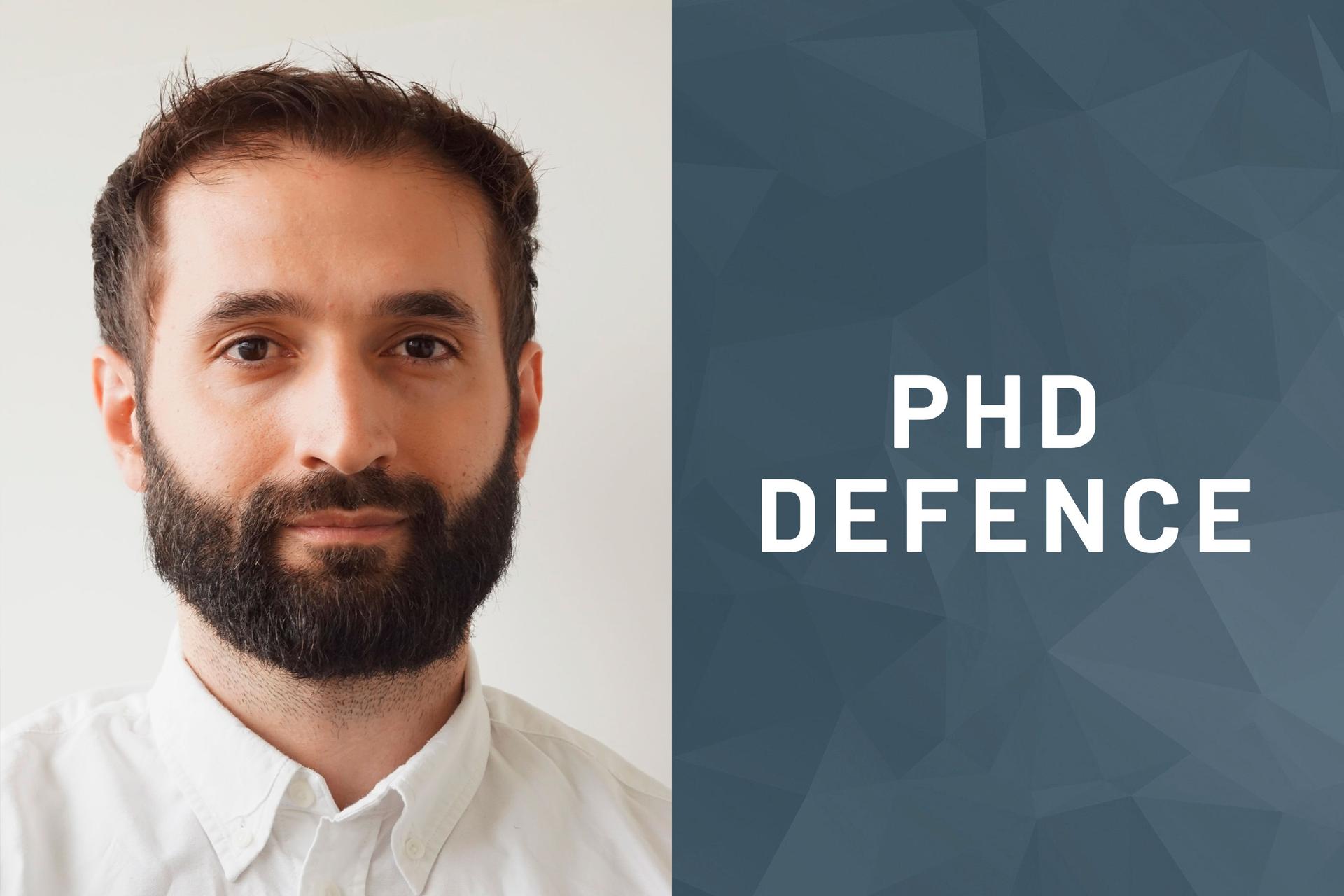
PhD defence by Kemo Usto
CREATE
Seminar Room: 4.521
Rendsburggade 14
9000 Aalborg, Denmark.
25.08.2023 13:00 - 16:30

English

On location
CREATE
Seminar Room: 4.521
Rendsburggade 14
9000 Aalborg, Denmark.
25.08.2023 13:00 - 16:30
English
On location
Department of Architecture, Design and Media Technology
PhD defence by Kemo Usto
CREATE
Seminar Room: 4.521
Rendsburggade 14
9000 Aalborg, Denmark.
25.08.2023 13:00 - 16:30
English
On location
CREATE
Seminar Room: 4.521
Rendsburggade 14
9000 Aalborg, Denmark.
25.08.2023 13:00 - 16:30
English
On location
Title
SAFE SINK TECTONICS – Towards a Metabolism of the Built Environment within Planetary Capacities
Program
13:00 – 13:05 Moderator Tenna Doktor Olsen welcomes the guests
13:05 - 13:50 Presentation by Kemo Usto
13:50 – 14:05 Coffee break
14:05 – 16:00 (latest) Questions
16:00 – 16:30 Assessment
16:30 Reception and announcement from the committee
Assessment committee
- Professor MSO Nicolai Bo Andersen, Royal Danish Academy
- Associate Professor Roberto Cavallo, Delft University of Technology
- Associate Professor Hanna Mattila (chair), Aalborg University
Supervisors
- Associate Professor, Lea Holst Laursen, Aalborg University
- Professor, Marie Frier-Hvejsel, Aarhus School of Architecture
Information
The defense will be conducted in-person. If you wish to participate in the reception, please remember to sign up via Doodle by the provided link:
If you wish to participate online on Zoom, please send an email to kwro@create.aau.dk, and she will invite you to the session.
Be aware that you must be muted during the whole defense, also your camera must be off in order to maintain transmission capacity and prevent technical interruptions.
The defense starts exactly at 13.00 pm. Please, make sure that you have logged in at least five minutes before that time. The session is open from 12.45pm. You are not allowed to join the online session after the defense has started, neither during the break or the examination.
Abstract
This PhD thesis is a theory-building exploration that attempts to build a material-centered and metabolic architectural theory based on two complementary disciplinary frameworks, i.e., that of industrial ecology and tectonic design theory.
Material flows in the built environment are a large and complex dynamic, containing certain paradoxical mechanisms where intentions and material manifestations are sometimes not aligned as intended (Jevons Paradox). As an extension of this, we can observe that the practical and material dimensions of theory building are lacking in architectural theoretical discourse. Specifically, even in cases where architectural theory explicitly centralizes matter, it does not really integrate actual (metabolic) material concerns but only uses matter as a stepping-stone for the legitimization of more and more creative endeavors (and subsequent material flows). To deal with these discrepancies, this doctoral study hypothesized the potentials of juxtaposing industrial ecology (social metabolism) theory and tectonic theory towards the development of a metabolic theory informed by industrial ecology. The questions are thus how such a theory can be built, and what its subsequent analytic and design capacities could bring in terms of new insights and critical reflections?
To explore this, this doctoral thesis structures a systematic interdisciplinary research design by way of a mixed-method abductive research approach. It uses a multitude of relevant methods – both in the written papers as well as the dissertation chapters (of building and testing of the theory) – to systematize the exploration and theory development methods are needed: case study, research-by-design, method, literary reviews, and several other methods for working with interdisciplinarity.
The findings resulted in a theory called (im)material metabolism which centralizes the notion of Urban Sink and its nuanced spectrum of five key constructs of material and immaterial considerations which are inter-relational and causal. The application and testing of said theory also brought about new metabolic insights. In the instance of an analytic application, the key finding was that of the (im)material surplus which potentially performs as a material investment. In the instance of the design application, the theory permitted an exploration of large-scale urban systems of storage sites as a way to deal with large amounts of construction waste. Both the analytic and design capacities allowed for a further linking of other fields to define what is a seemingly abstract “metabolic” understanding of the built environment could entail through the notion of the Urban Sink.
While the theory promoted significant considerations, reflections, and findings concerning material use in the built environment, further research should be done to either explore new facets and trajectories as well as further qualify and substantiate the found considerations and other variants they may have. The theory cannot replace other theories and methods but acts supplementarily to both design theories, methods, and tools.