
6/17/2026
Heatscapes
Students:
Caroline Toft Harder, Isabella Amores Ferguson Koch & Agnethe Sohn Østergaard
6/17/2026
Heatscapes
Students:
Caroline Toft Harder, Isabella Amores Ferguson Koch & Agnethe Sohn Østergaard
Abstract dansk:
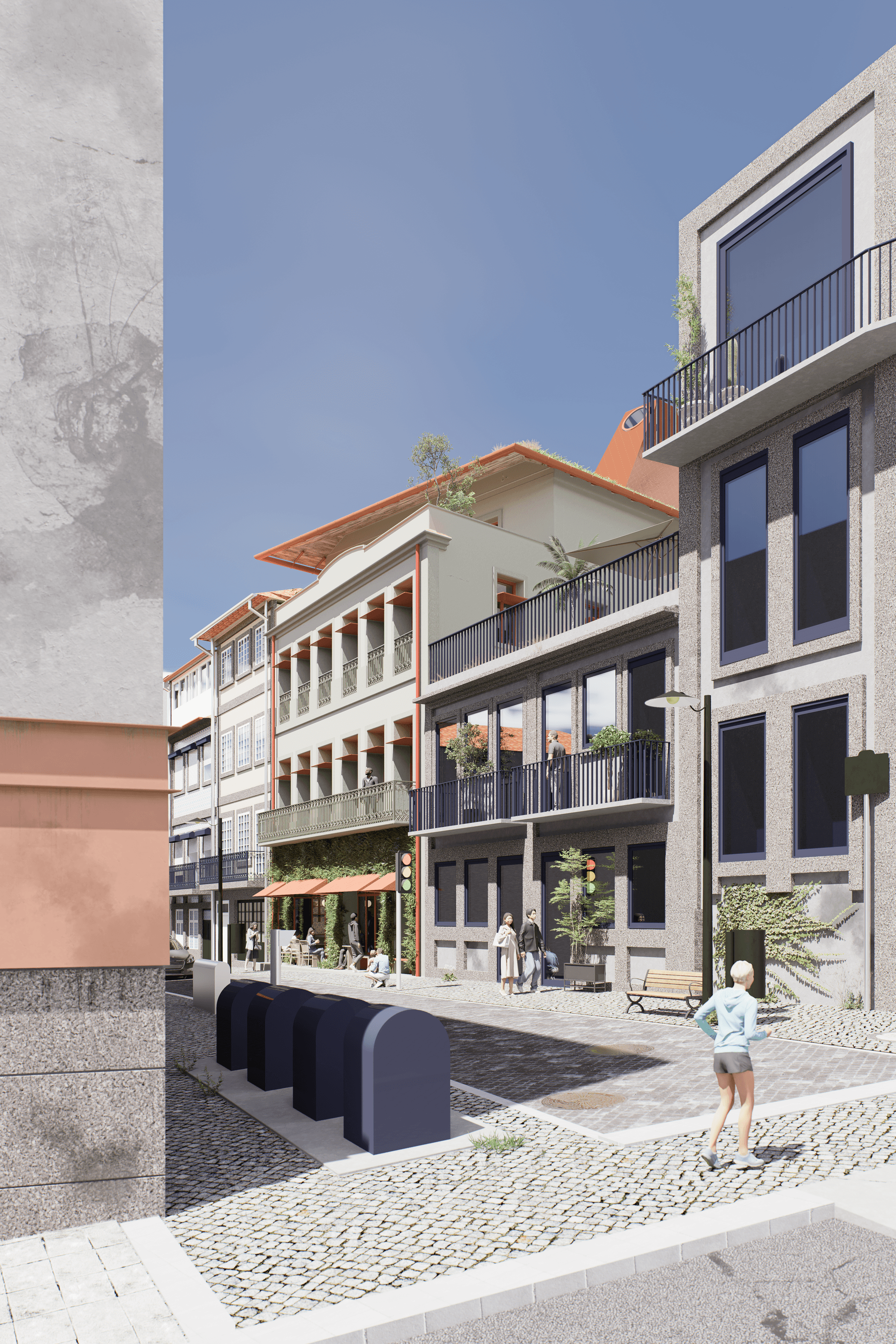
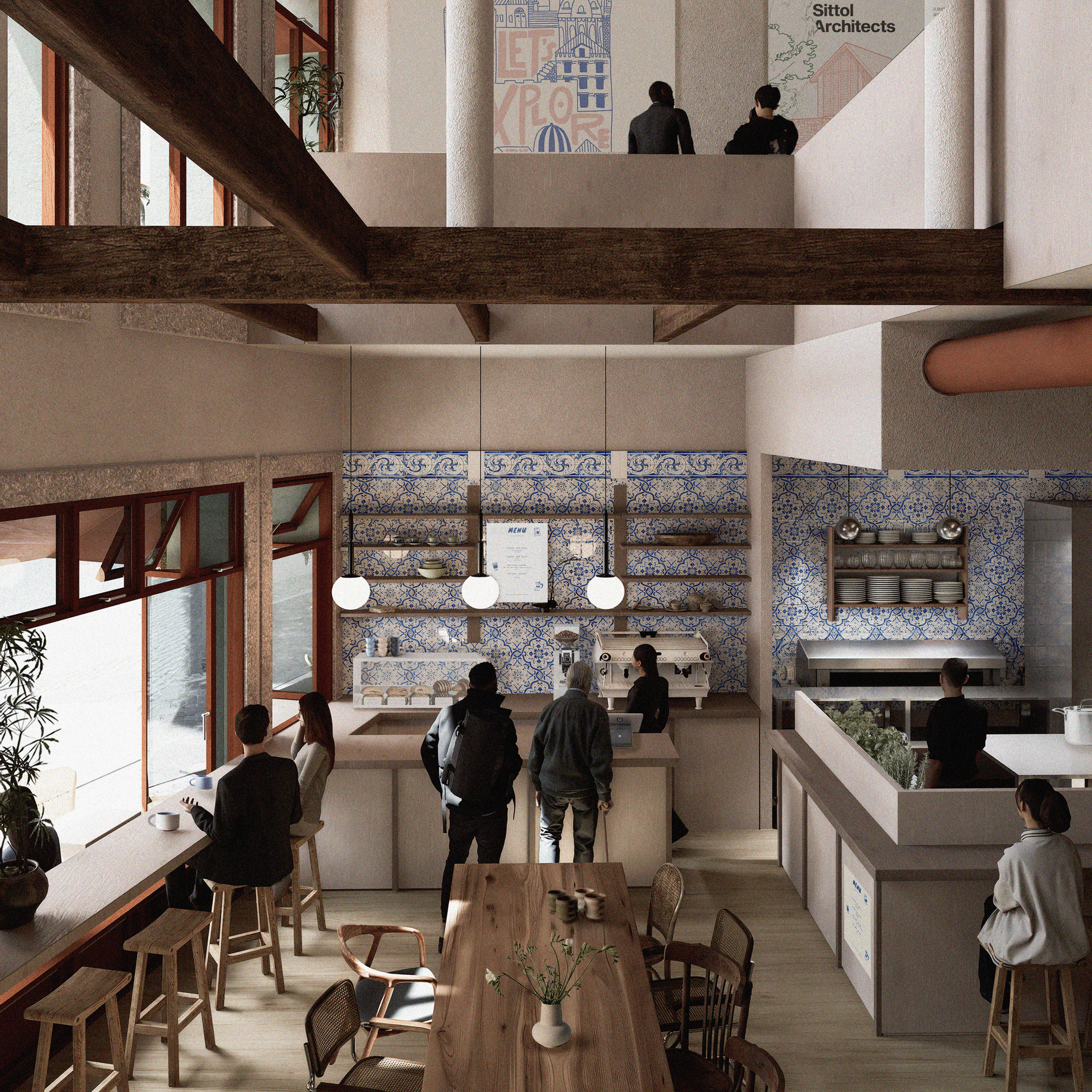
Denne rapport præsenterer transformationen af en traditionel portugisisk bybygning til Heatscapes, et klimaanpasset arkitektonisk forslag. Gennem en integreret designproces, styret af den vitruvianske triade – æstetik, funktion og holdbarhed – er arkitektoniske former, rumlige funktioner og klimatiske tilpasningsstrategier blevet udforsket og evalueret gennem simulationssoftware og designeksperimenter.
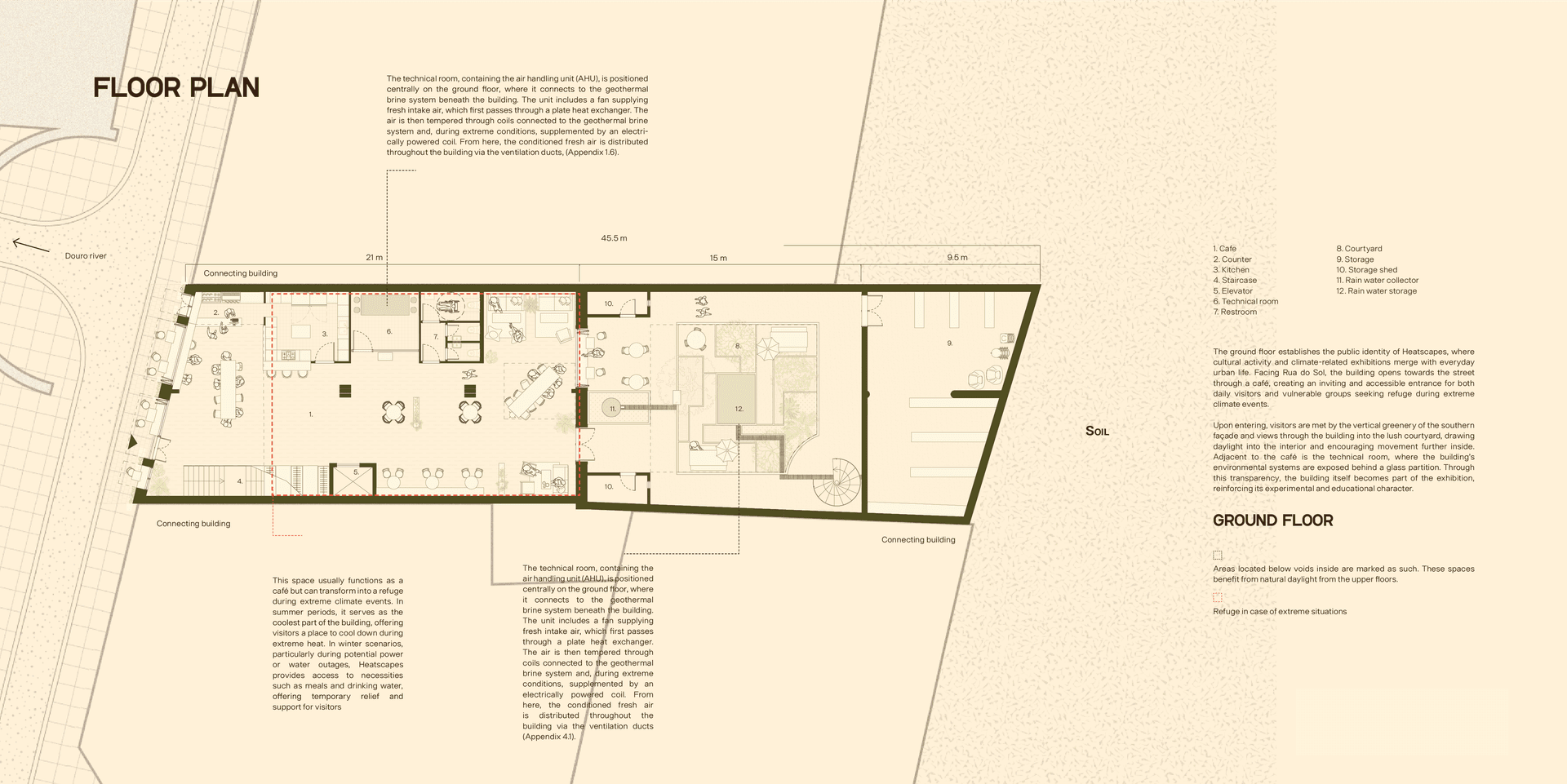
Analyser af brugerne, den urbane kontekst, den eksisterende bygning og det lokale klima afdækkede projektets primære mål: at skabe et hverdagsfællesskabsrum for sårbare befolkningsgrupper, samtidig med at der sættes fokus på klimabevidsthed og videndeling. Klimaanalyser viste en fremtidig stigning i hyppighed og intensitet af hedebølger, hvilket positionerer Heatscapessom et klimamæssigt tilflugtssted under ekstreme vejrbegivenheder, samtidig med at der sikres termisk komfort indendørs under både nuværende og fremtidige forhold.
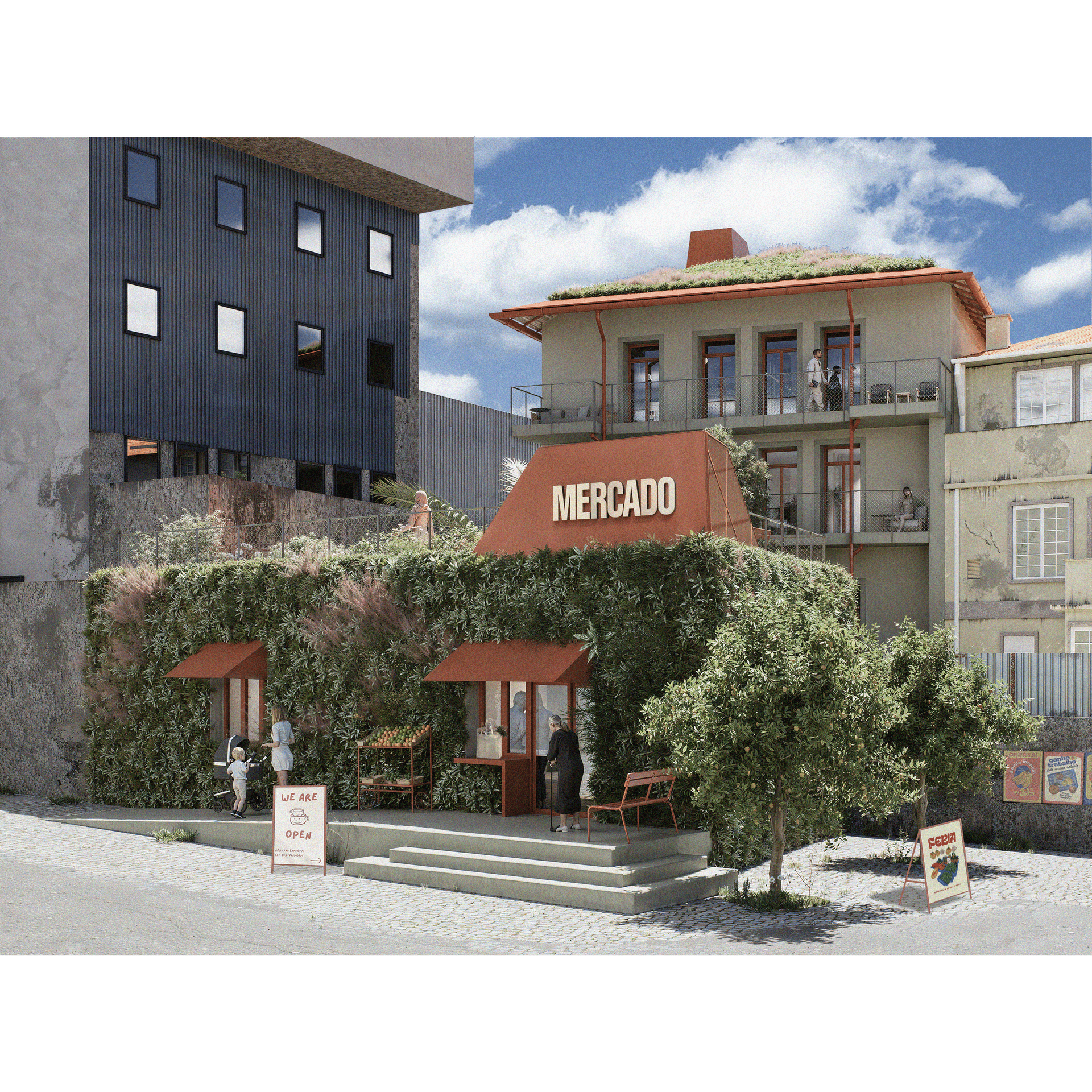
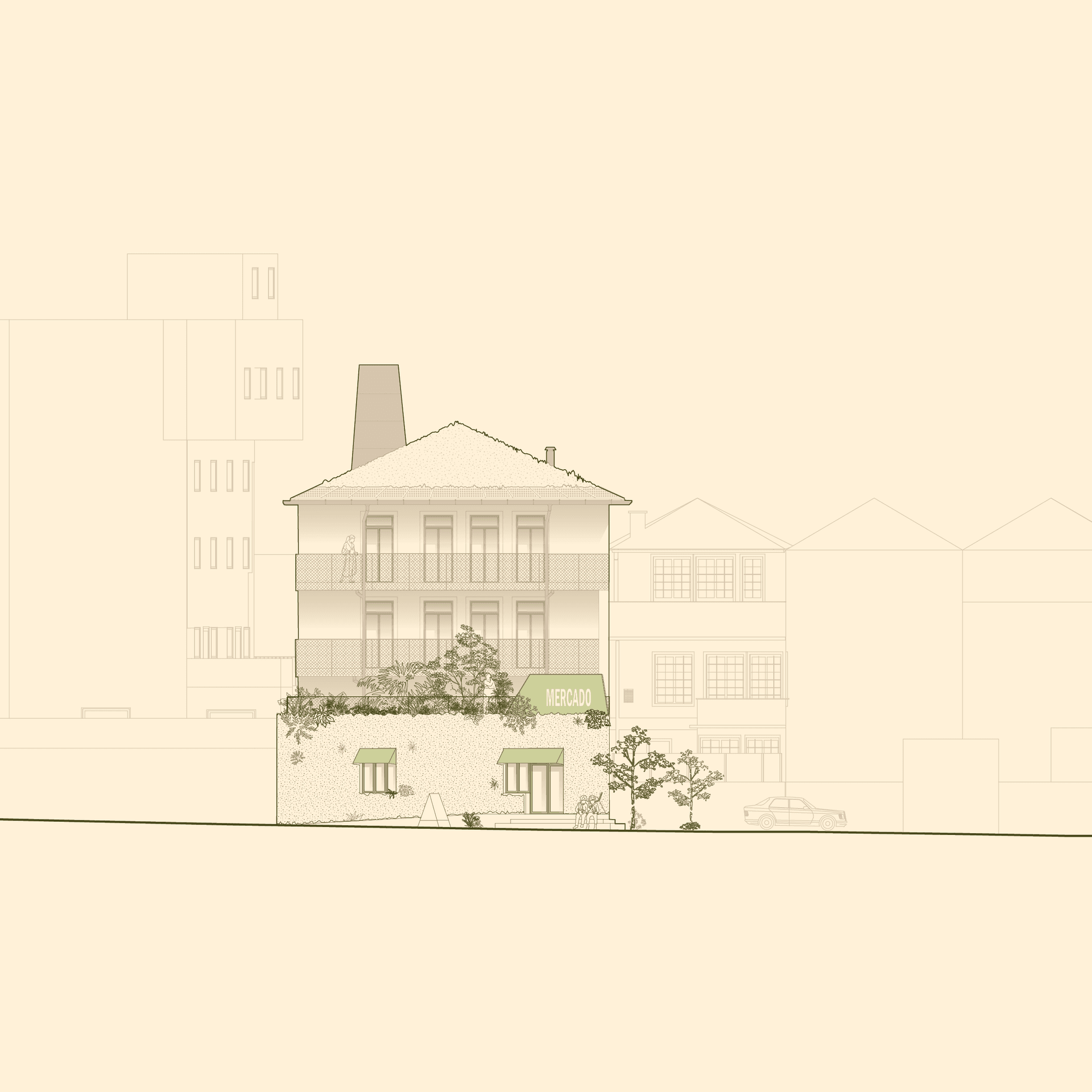
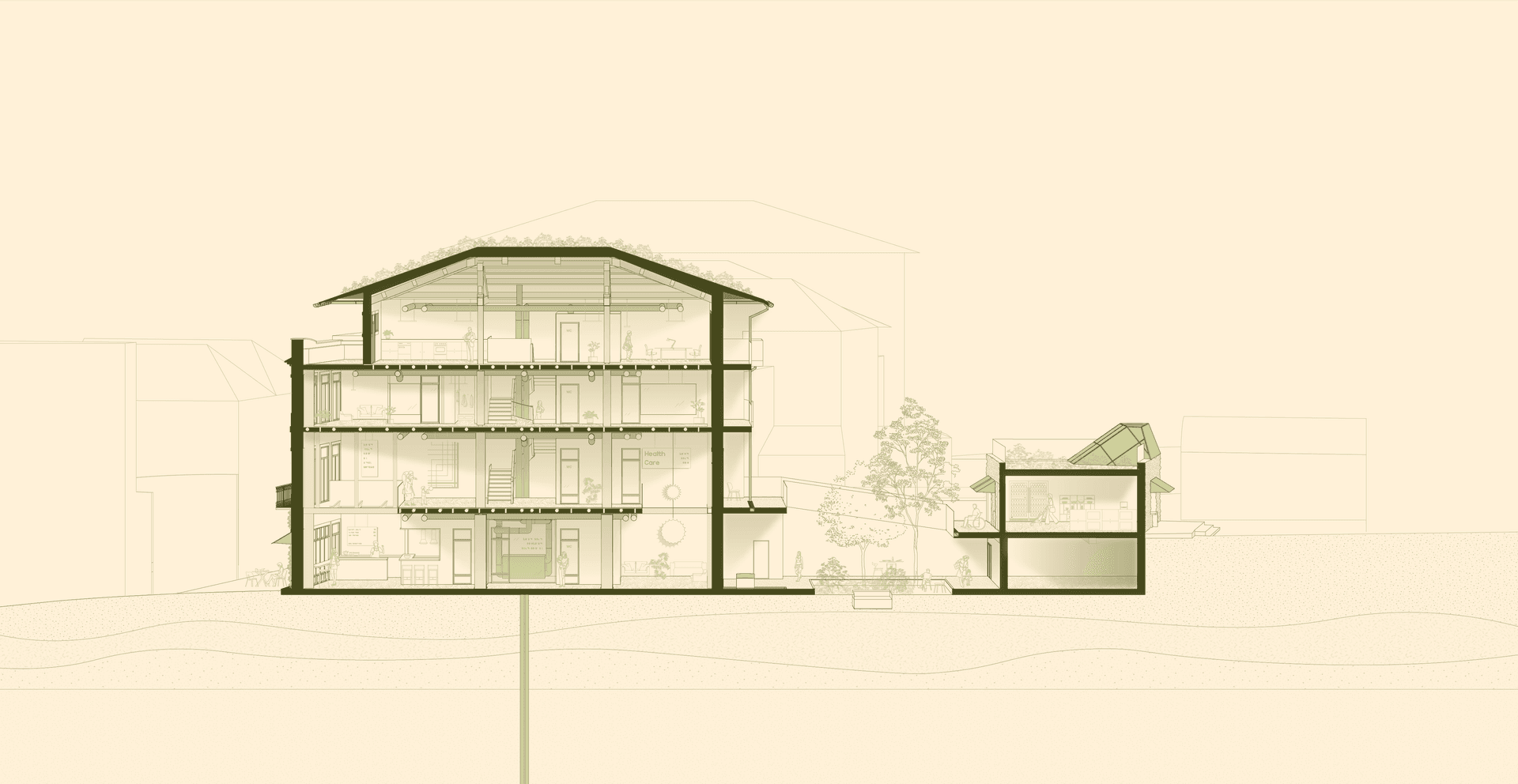
Den endelige syntese præsenterer et designforslag, der demonstrerer, hvordan strategier som geotermisk ventilation, ekstra isolering, udvendige lameller, grønne tage og beplantede facader kan forenes æstetisk, funktionelt og teknisk, samtidig med at de forbedrer det termiske indeklima og reducerer energiforbruget markant. Samlet udgør disse tiltag en holistisk og bæredygtig tilgang til klimaanpasset bygningsdesign i Porto. Det endelige forslag opnår et lavt energiforbrug på 12,7 kWh/m²/år, svarende til en reduktion på 96,45 % i forhold til det oprindelige energibehov, hvilket demonstrerer effektiviteten af den integrerede designproces.
Abstract engelsk:
This report presents the transformation of a traditional Portuguese urban building into Heatscapes, a climate-adaptive architectural proposal. Through an integrated design process guided by the Vitruvian Triad of aesthetics, utility, and durability, architectural forms, spatial functions, and climate-adaptive strategies were explored and evaluated through simulation software and design experimentation.
Analysis of the users, urban context, existing building, and local climate revealed the project’s primary objective: to create everyday community space for vulnerable populations, while advocating for climate awareness and knowledge sharing. Climate analysis indicated a future increase in the frequency and intensity of heatwaves, positioning Heatscapes as a climate refuge during extreme weather events while ensuring indoor thermal comfort under both present and future conditions.
The final synthesis presents a design proposal demonstrating how strategies such as geothermal ventilation, additional insulation, external louvers, green roofs, and vegetated façades can be aesthetic, functional, and technical, while improving indoor thermal comfort and significantly reducing energy consumption. Together, these interventions form a holistic and sustainable approach to climate-adaptive building design in Porto. The final proposal achieved a low-energy performance of 12.7 kWh/m²/year, corresponding to a 96.45% reduction from the initial energy demand, demonstrating the effectiveness of the integrated design approach.