6/17/2026
Rehumanisation of Mont d'Est
Students:
Agata Kotewicz
6/17/2026
Rehumanisation of Mont d'Est
Students:
Agata Kotewicz
Abstract dansk:
Den præsenterede kandidatafhandling udforsker emnet rehumanisering af modernistiske byrum med eksemplet Mont d’Est-distriktet i Noisy-le-Grand i Frankrig. Hovedformålet var at skabe et projekt, der vil transformere denne betonlabyrint til et livligt, menneskeorienteret offentligt rum.
En vigtig del var at bruge Go-along-interviews i forbindelse med kortlægning af stier og knudepunkter som en analysemetode til fuldt ud at forstå områdets problemstillinger og sociale lag.
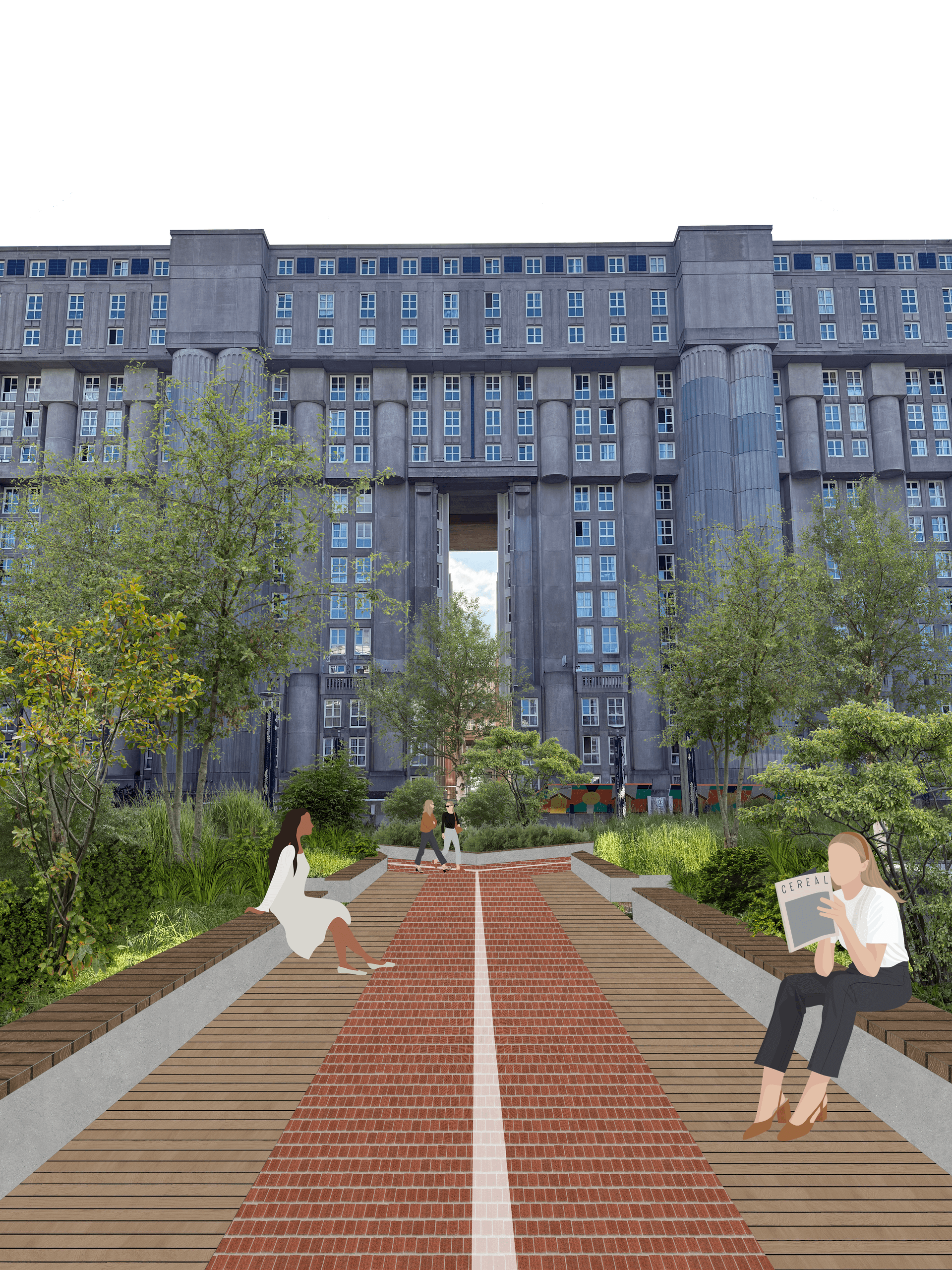
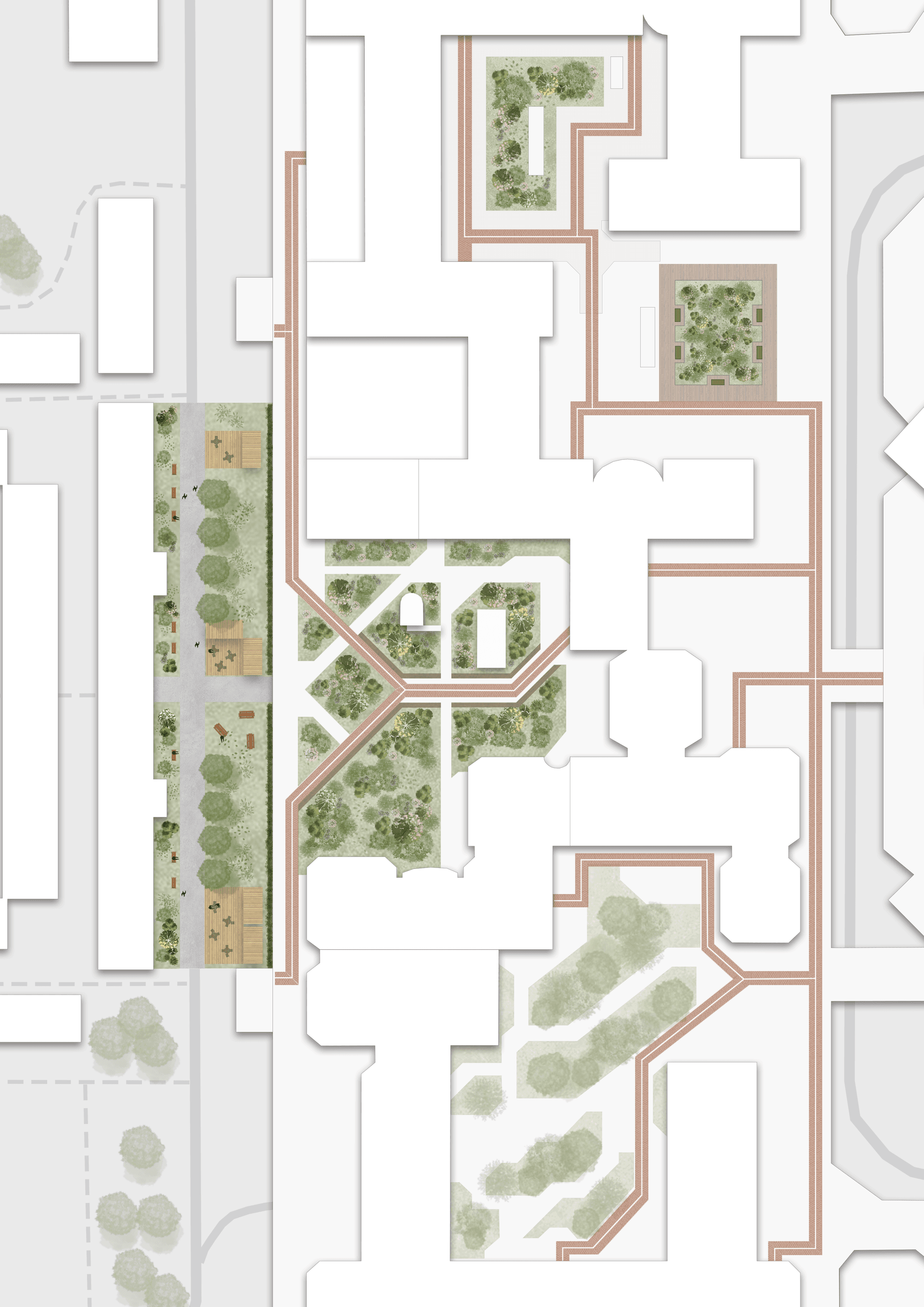
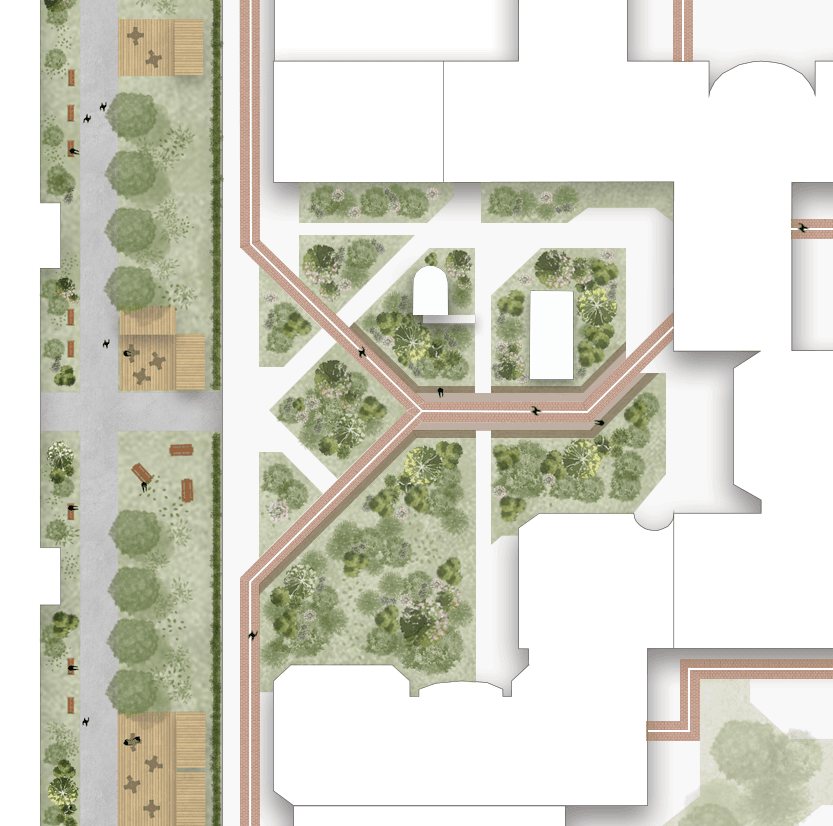
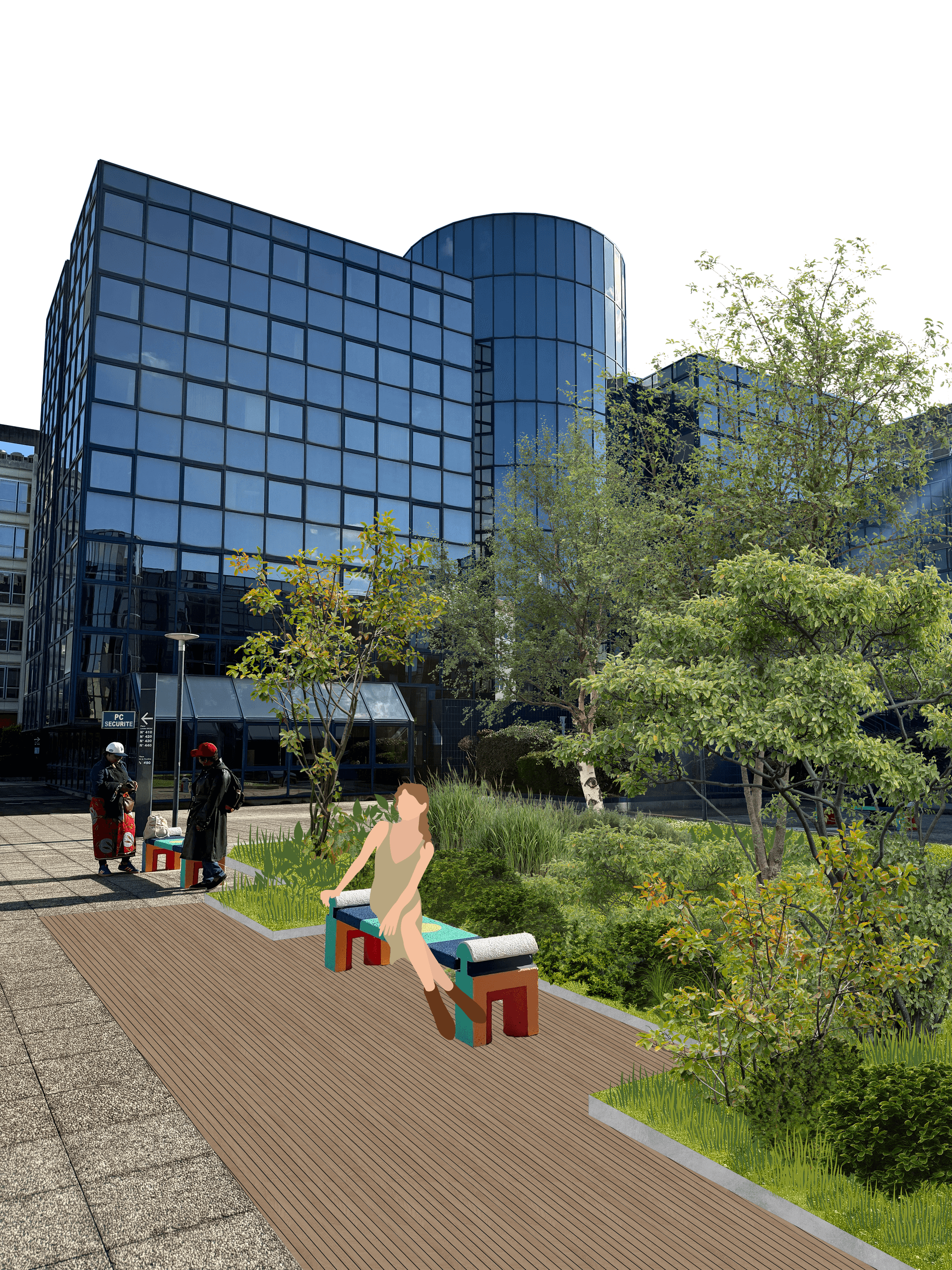
Svaret på de fundne problemstillinger er et projekt, der forbinder tre elementer. Vejvisningssystemet, forbundet med de flerlagede lommehaver, og transformerede Rue du Clos des Aulnes ved hjælp af Active Frontage-strategien. Ved at kombinere alle disse tre elementer fik vi et rum, der har klar visuel information, aktiviteter for det sociale liv, forbedret sikkerhed takket være ”øjnene på gaden”, og samtidig bringer komfort gennem udviklede grønne områder. Projektet viser, at vi med ikke-invasive interventioner kan bringe vitalitet og socialt liv til de problematiske byområder.
Abstract engelsk:
The presented master thesis is exploring the subject of re-humanisation of modernistic urban spaces on the example of Mont d’Est district in Noisy-le-Grand in France. The main objective was to create a project that will transform this concrete labyrinth into lively, human-oriented public space.
An important part was using the Go-along interviews connected with the mapping of paths and nodes as analysing methods to fully understand the issues and social layer of the site.
The answer to the found out problematics is the project that connects three elements. The system of wayfinding, connected with the multilayer pocket gardens and transformed Rue du Clos des Aulnes by usage of Active Frontage strategy. By putting all those three elements together, we got a space that has clear visual information, activities for the social life, improved safety thanks to the “eyes on the street”, and at the same time brings comfort through developed green spaces. The project shows that with non-invasive interventions we can bring vitality and social life to the problematic urban areas.