6/17/2026
The Blue Spine
Students:
Andreas Reinhold, Astrid Christina Lynggaard & Sarah Bodin Schalech
6/17/2026
The Blue Spine
Students:
Andreas Reinhold, Astrid Christina Lynggaard & Sarah Bodin Schalech
Abstract dansk:
Dette kandidatspeciale undersøger, hvordan Thyborøn kan tilpasse sig stigende klimarelaterede trusler, samtidig med at byens rumlige relationer, maritime identitet og forbindelse til vandet styrkes. Beliggende mellem Nordsøen og Limfjorden er Thyborøn udsat for overlappende klimatiske pres, såsom stormflod, havvandsstigning, erosion, stigende grundvand og nedsynkning. Samtidig er byen formet af fragmenterede rumlige rytmer og en hybrid identitet i overgang, forbundet med fiskeri, havneindustri og turisme flettes sammen.
Med udgangspunkt i Den Integrerede Designproces undersøger kanditatspecialet Thyborøn på tværs af forskellige skalaer og fremhæver klimatilpasning som en både rumlig og teknisk udfordring. Specialet undersøger den nuværende klimatilpasning i Thyborøn og understreger vigtigheden af at forstå det lokale miljø for at identificere områdets identitet, konflikter og potentialer.
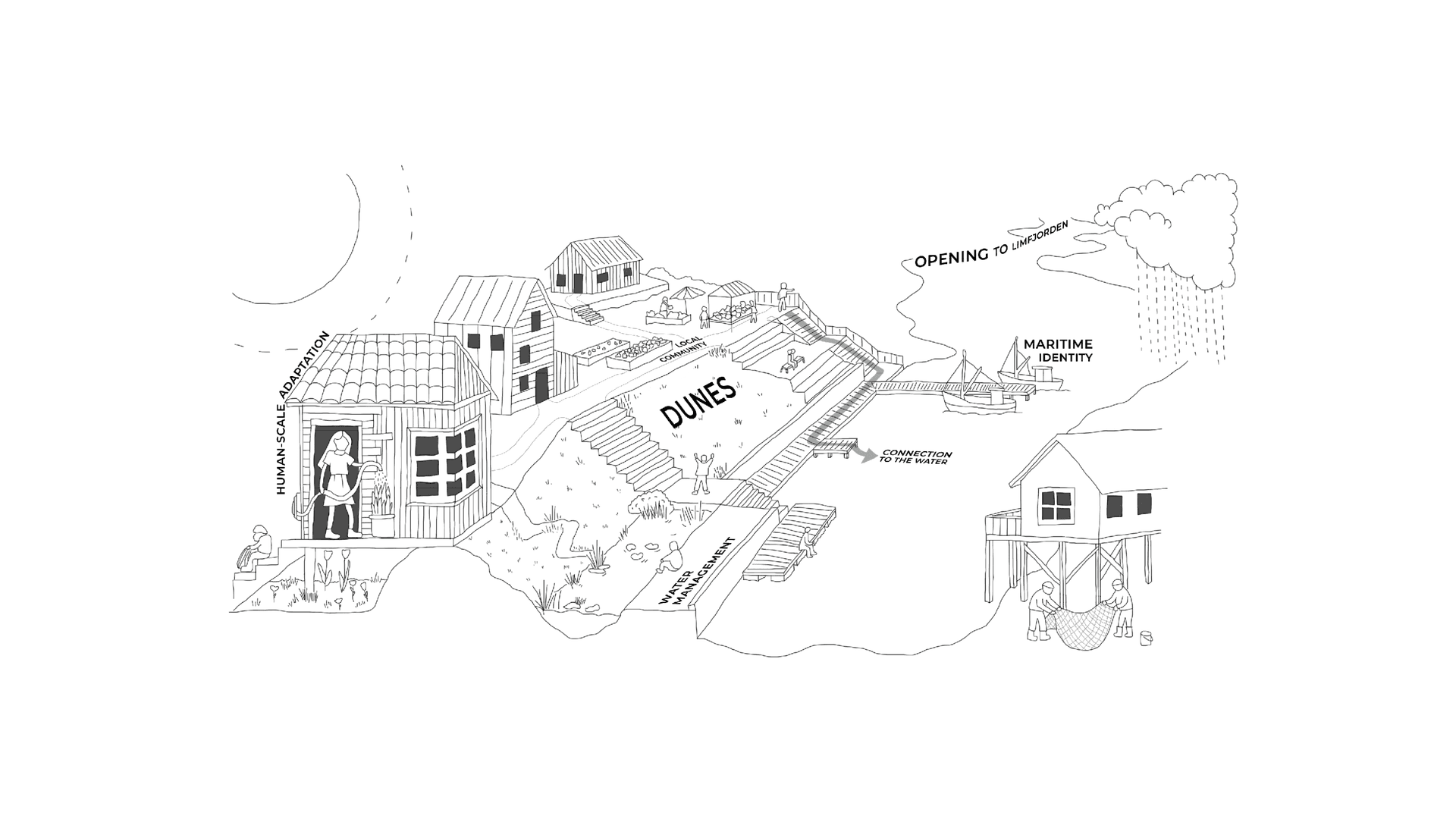
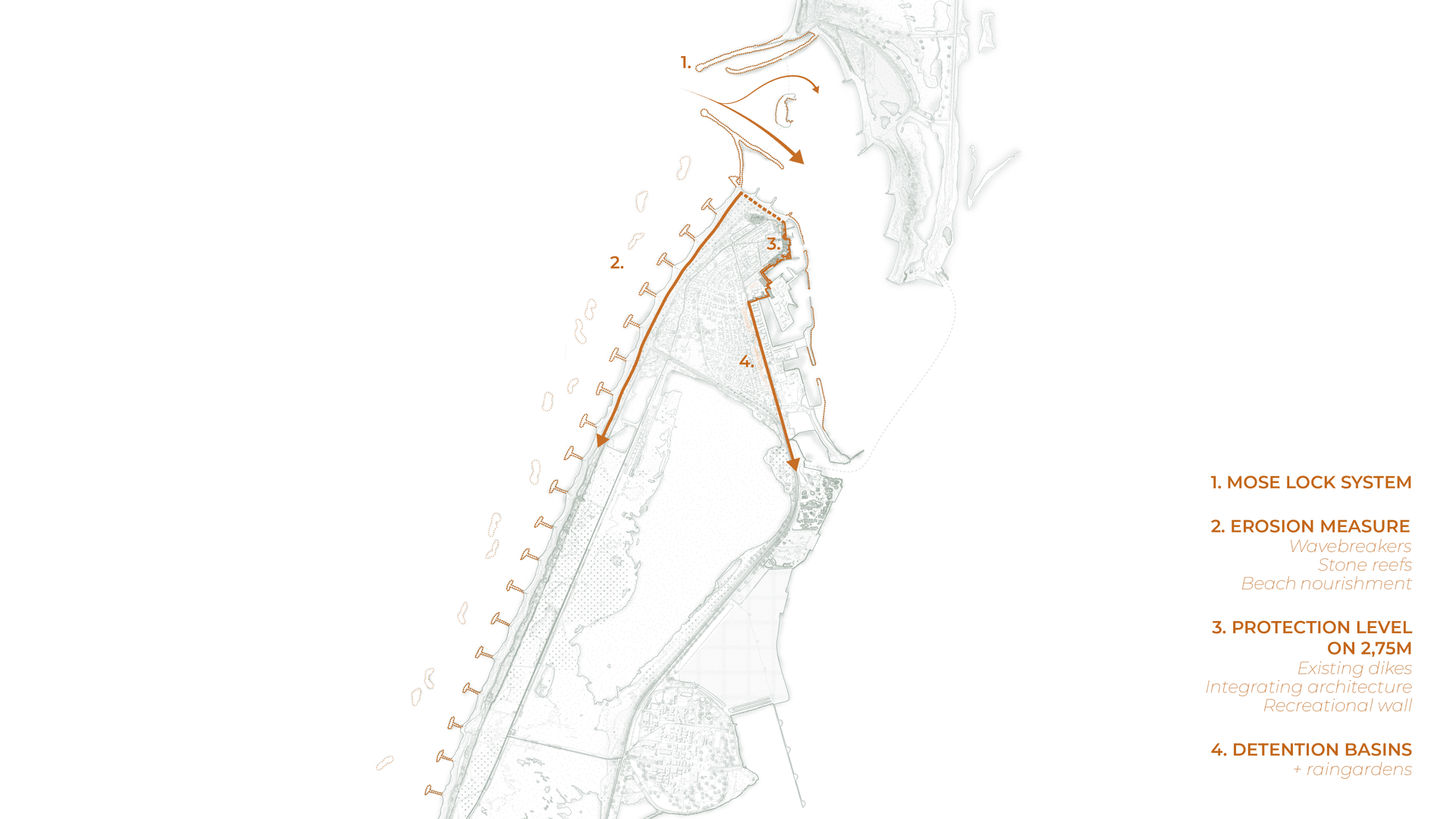
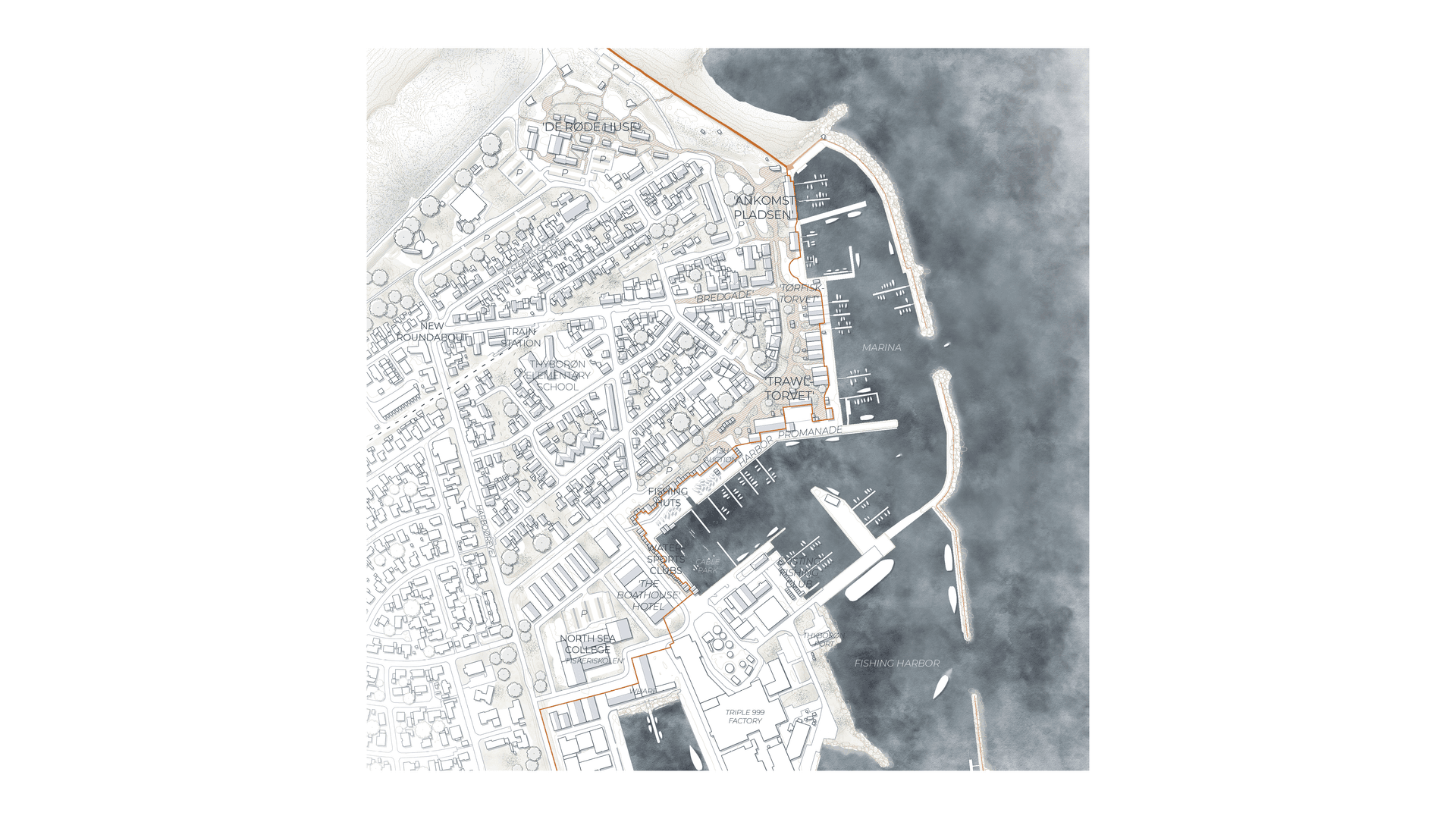
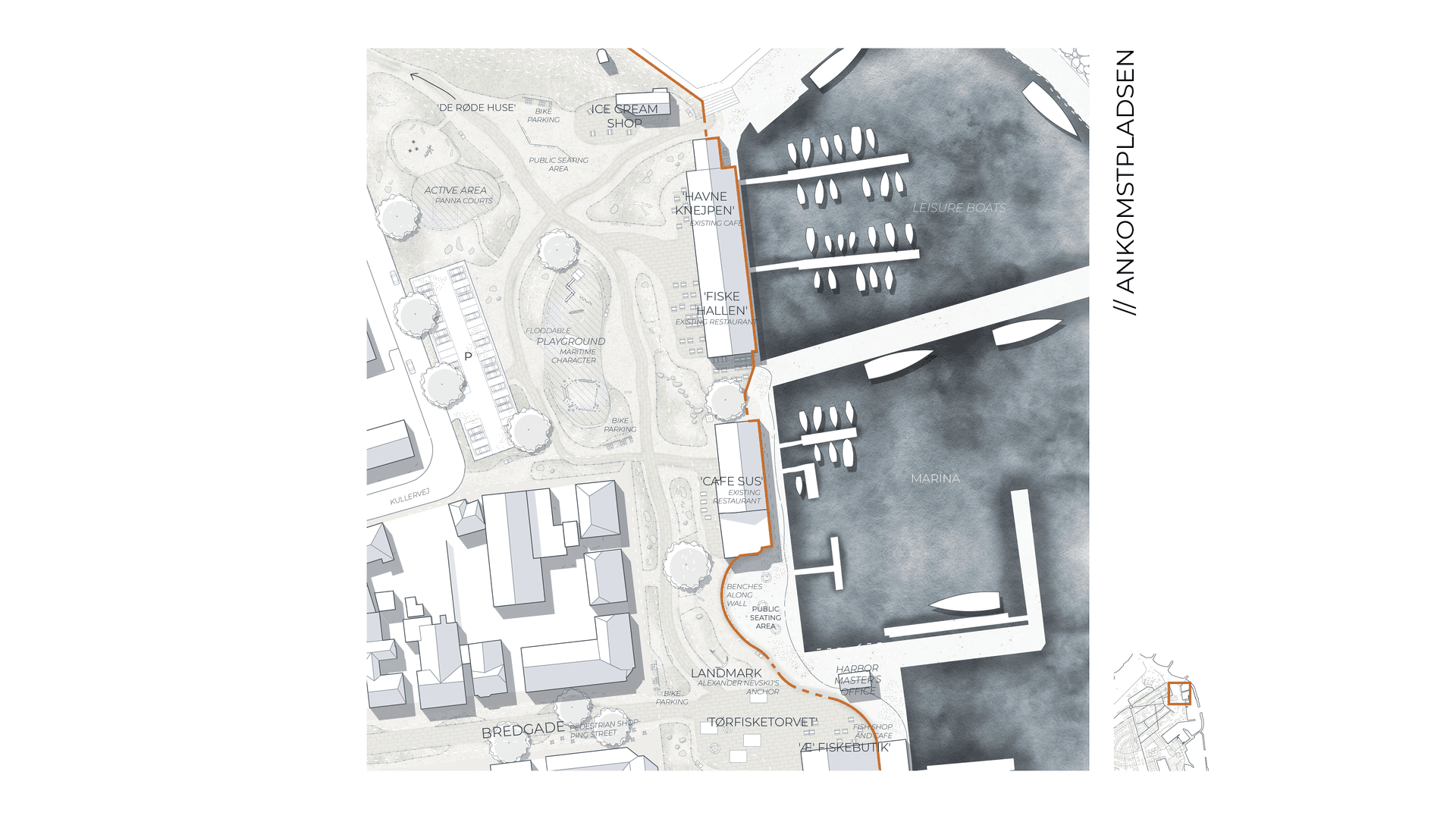
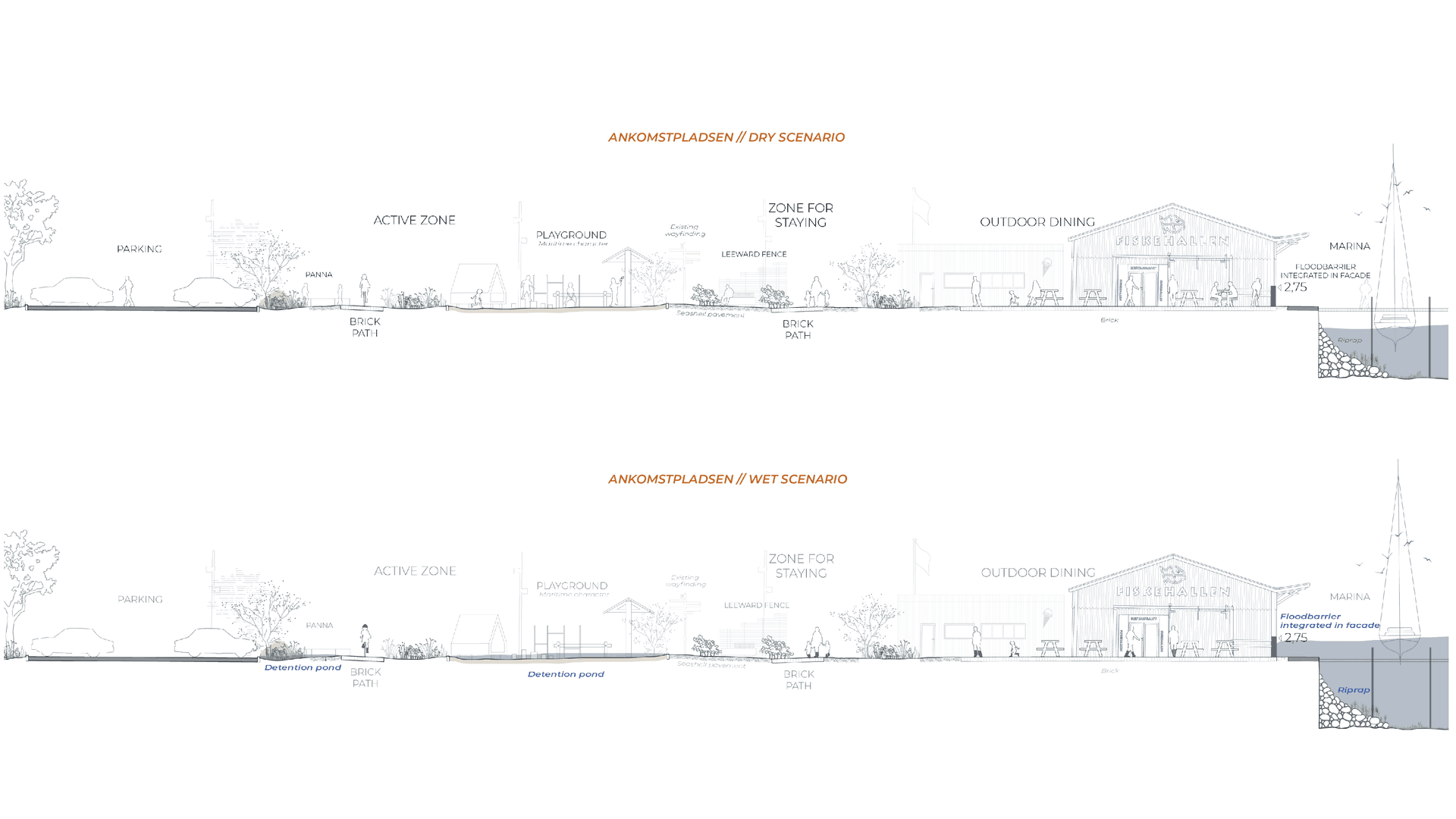
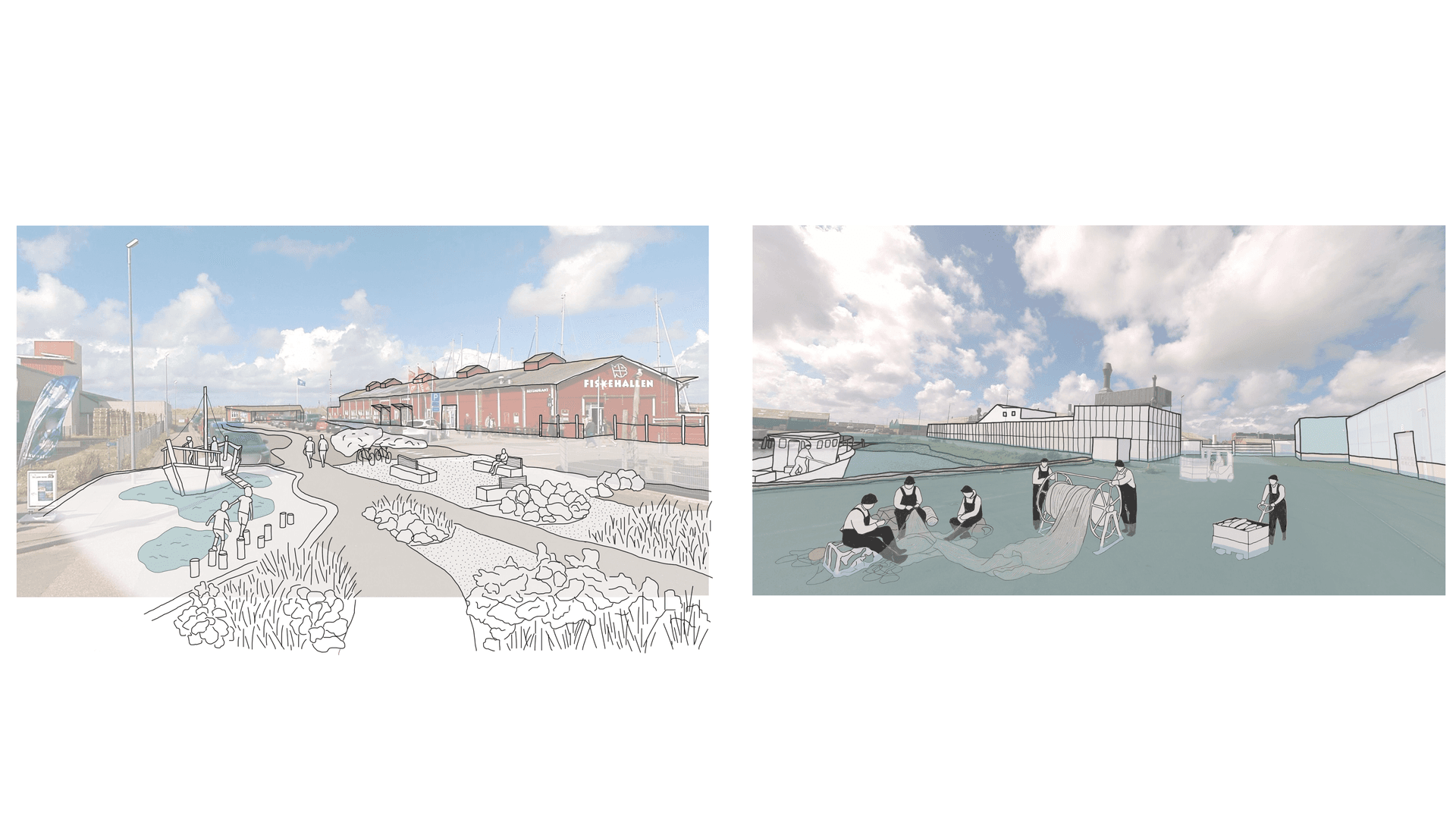
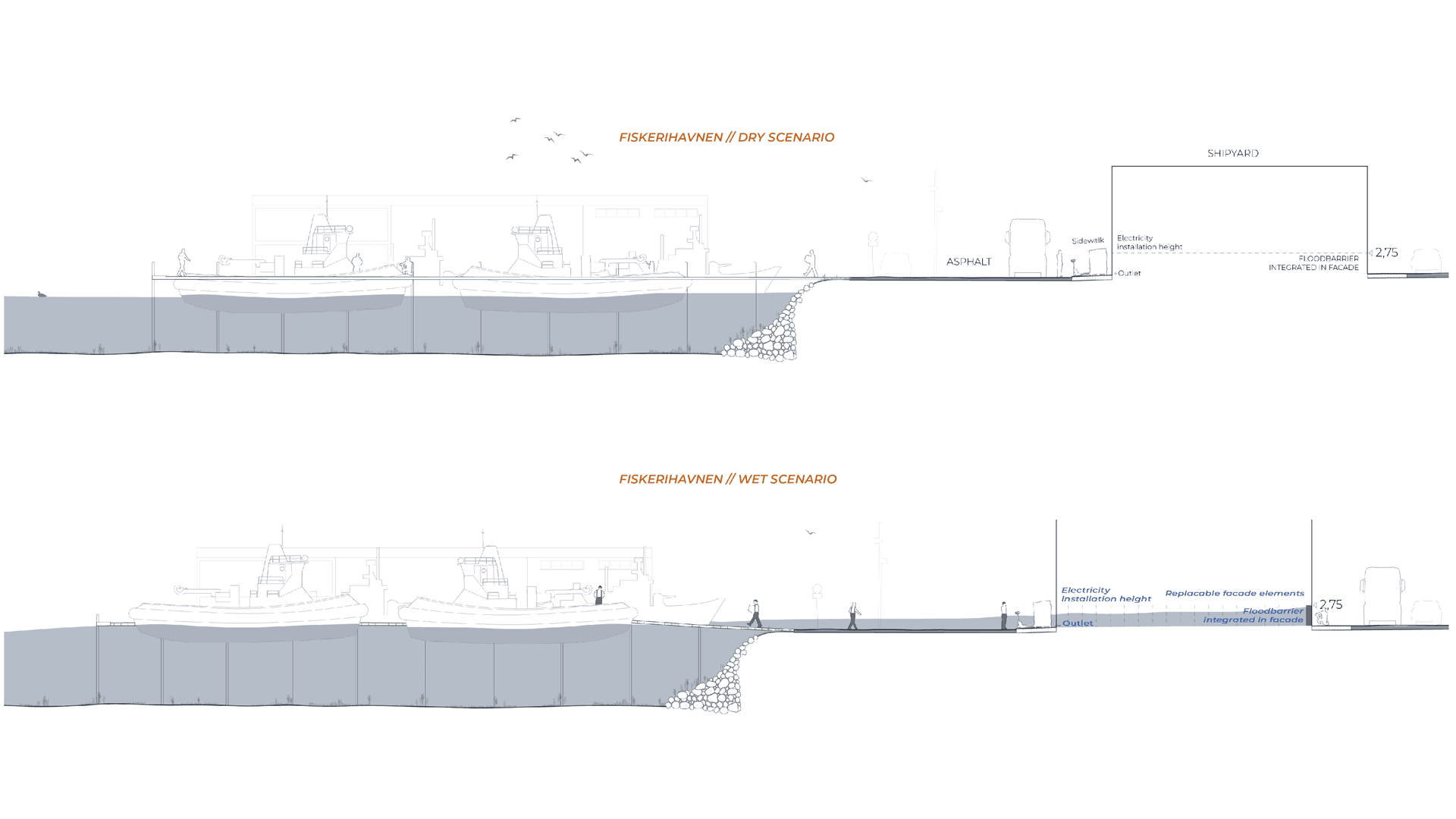
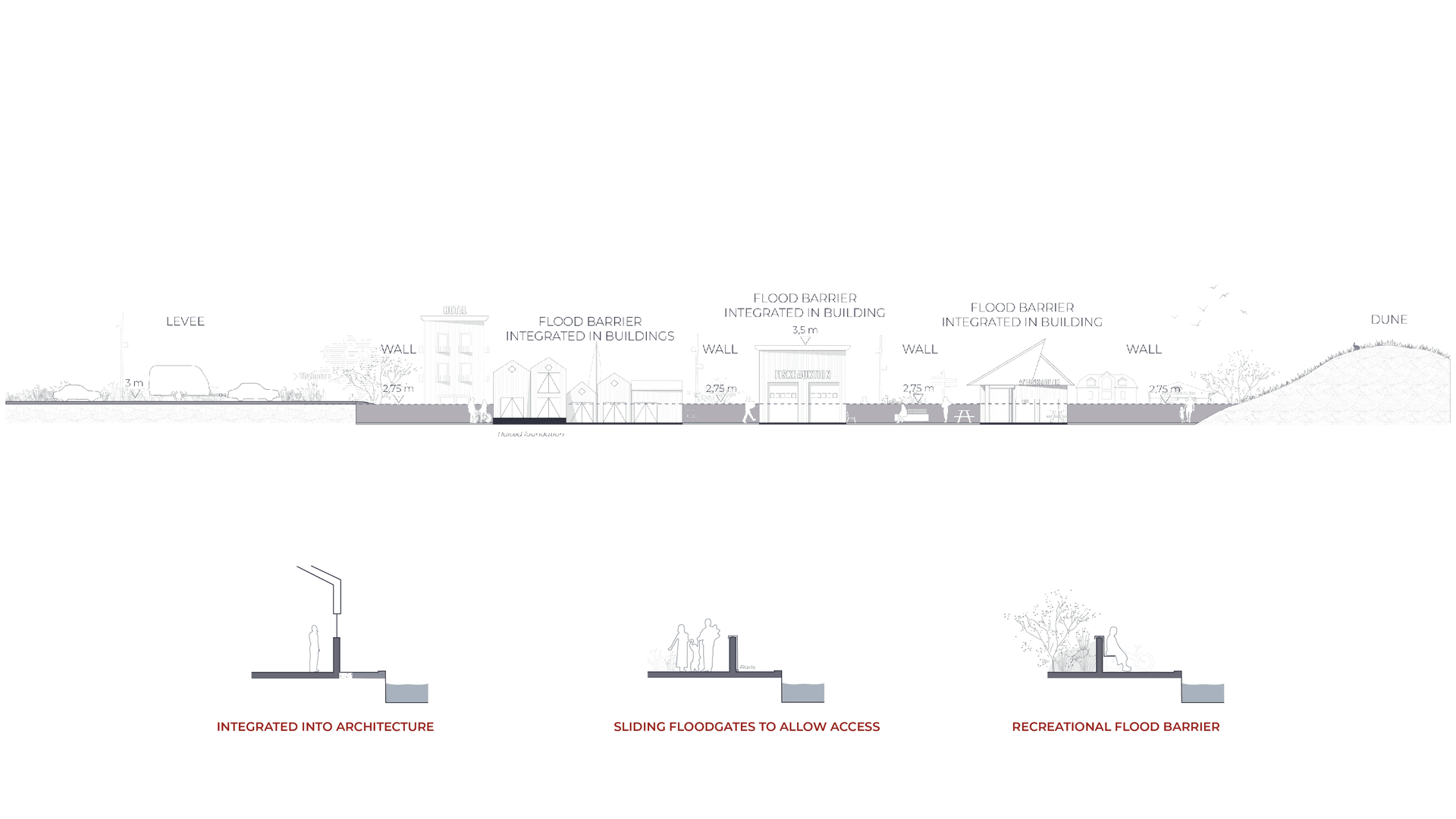
Det endelige projektforslag udvikler en hybrid tilpasningsstrategi, der kombinerer regionale og lokale interventioner. På regional skala anvendes en adaptiv sluse i Thyborøn Kanal, som adresserer stormflodspresset fra Nordsøen ind i den vestlige del af Limfjorden. På lokal skala integreres oversvømmelsesbeskyttelse langs den østlige havnefront, hvor nye offentlige funktioner og bygninger bidrager til et mere aktivet og sammenhængende bymiljø.
Frem for at behandle klimatilpasning som et separat designelement undersøger dette speciale, hvordan tilpasning og beskyttelse kan blive integreret del af Thyborøns fremtidige udvikling. Projektet foreslår en strategisk model for, hvordan Thyborøn kan tilpasse sig fremtidige klimaforhold, samtidig med at byens rå maritime identitet bevares, og det urbane liv styrkes.
Abstract engelsk:
This thesis investigates how Thyborøn can adapt to increasing climate-related threats while strengthening the town’s spatial relations, maritime identity, and connection to water. Located between the North Sea and Limfjorden, Thyborøn is exposed to overlapping climate pressures such as storm surges, sea level rise, erosion, groundwater, and subsidence. At the same time, the town is shaped by fragmented spatial rhythms and a hybrid identity in transition, connected to fishing, harbor industry, and tourism.
Through the methodology of the Integrated Design Process, the thesis examines Thyborøn across different scales, highlighting climate adaption as both spatial and technical challenges. The project investigates the status quo of climate adaptation in Thyborøn and emphasizes the importance of understanding the local environment in order to identify the site's identity, conflicts, and potentials.
The final proposal develops a hybrid adaptation strategy that combines regional and local interventions. At the regional scale, an adaptive lock in Thyborøn Canal addresses the storm surge pressure entering the western Limfjord. At the local scale, flood protection is integrated along the eastern harbor front, where new public functions and buildings contribute to a more active and connected urban environment.
Rather than treating climate adaption as a separate design element, this thesis investigates how adaption and protection can become part of Thyborøn’s future development. The project proposes a framework for how Thyborøn can adapt to future climate conditions while preserving its raw maritime identity and strengthening urban life.